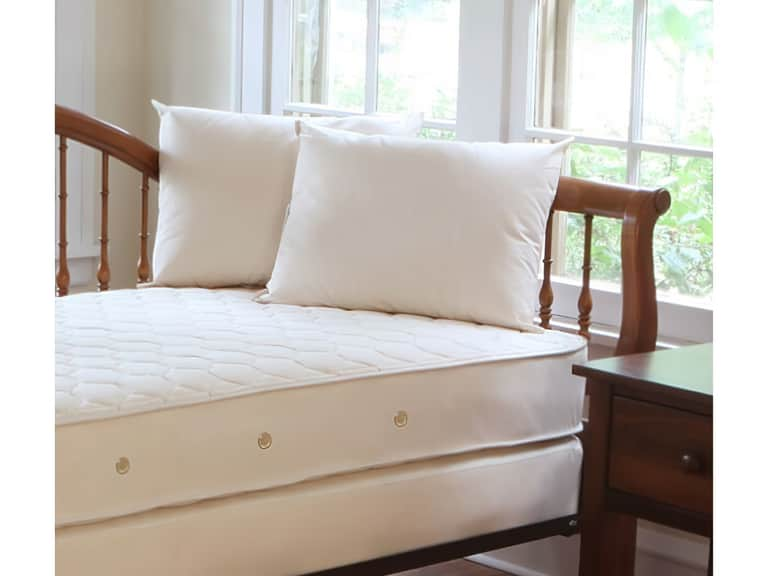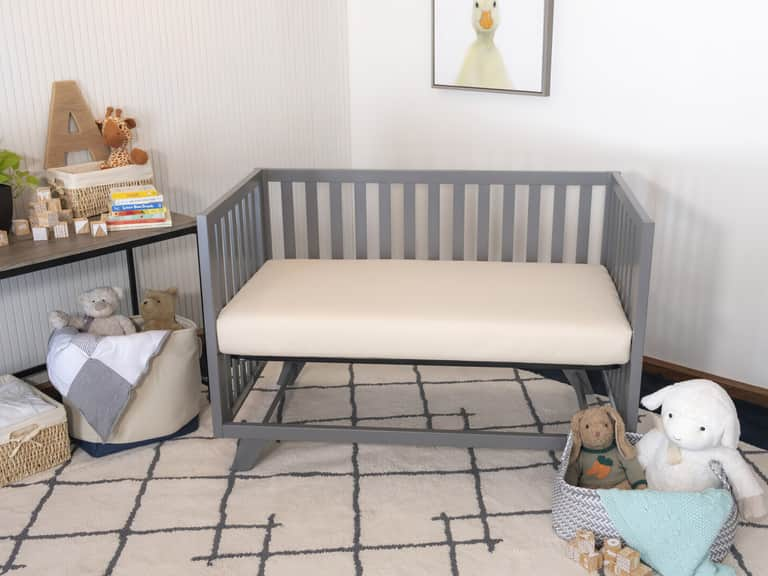
Baby bedding · Materials, fit and care
Naturepedic Crib Sleep Surfaces: Materials, Fit and Care
A baby’s sleep surface is a small object with a large job: it must fit the cot, remain firm and flat, and be easy to keep clean. Comparing Naturepedic crib options means looking past labels such as “organic” or “breathable” to understand construction, dimensions, care instructions and the safe-sleep guidance that applies where you live.
Published 24 November 2026
Preparing a nursery can turn ordinary decisions into consequential ones. A mattress is not merely another piece of bedding; it is the surface on which a baby will spend many hours, and its fit and condition matter every time the cot is used. Families comparing organic crib mattresses may be drawn first to fibre names, waterproof finishes or sustainability claims. Those details can help describe a product, but they do not replace the essential questions: Is the mattress suitable for the cot? Is it firm, flat and in good condition? Can its cover be cleaned as directed? Does the complete sleep setup follow current local safe-sleep advice?
Naturepedic’s product details illustrate why it is useful to examine a sleep surface as a system rather than a label. The company’s Breathable 2-Stage Organic Crib Mattress is described as having a firm, waterproof infant side, a second side intended for toddler use, and a removable washable pad. Its listed materials include certified organic cotton, a polyethylene waterproof surface and, in one version, a spring core. But these are product-specific descriptions, not a substitute for checking the exact model, instructions and cot dimensions before use.
This guide explains the questions to ask when assessing materials, construction, fit and care. It is intended as practical consumer information, not medical advice or an endorsement of any particular product.
Start with the sleep setup, not the marketing language
Terms such as “natural,” “organic” and “breathable” can describe different things. Organic certification may apply to a fibre or to a defined part of a product’s production chain; it does not, by itself, establish that a mattress is the right size, firmness or shape for a particular cot. Likewise, a breathable component does not mean that a baby can safely sleep in any position or with additional bedding. Read the manufacturer’s description and certification scope carefully, then consider how the item performs in the actual cot.
For babies, established safe-sleep guidance should lead the decision. In the UK, families can consult the NHS and The Lullaby Trust for current advice. In general, this includes placing a baby on their back to sleep, using a firm, flat and waterproof mattress that fits the cot, and keeping the sleep space clear of pillows, duvets, loose blankets, cot bumpers and soft toys. Follow the latest local guidance and any specific instructions supplied with the cot and mattress.
That context is especially important when a product includes a separate pad or a surface described as breathable. A removable layer should be used only in the configuration and for the age or stage specified by the manufacturer, and only if it is compatible with the cot and safe-sleep recommendations where the family lives. Do not add an improvised topper, extra padding or an unapproved cover in an effort to change the feel of an infant mattress.
What materials can tell you—and what they cannot
Material information helps families understand what touches the baby, what provides structure, and what is intended to resist moisture. Naturepedic’s Breathable 2-Stage product information identifies organic cotton in its construction and describes a waterproof surface made with polyethylene. The company also describes versions with either WaveSupport technology or a traditional innerspring core. Product specifications can change, so check the details for the exact model and size rather than assuming every version shares the same components.
Organic cotton is a fibre choice, not a complete performance description. The fabric’s feel, quilting, layers and finishing all influence the finished surface. If organic sourcing is important to your household, look for the name of the certification, which materials it covers and whether the documentation applies to the product you are considering. Avoid treating one certification or general phrase as proof of every possible environmental, health or safety benefit.
A waterproof layer can be useful because liquids are easier to wipe from an intact, sealed surface than to remove from a mattress interior. The product details describe the Naturepedic infant side as waterproof and wipe-clean. That may help with routine accidents, but waterproof does not mean stain-proof, maintenance-free or impervious to damage. A torn seam, puncture, damaged coating or persistent moisture may change how the surface works. Inspect the mattress and follow the maker’s instructions if it becomes damaged or wet beyond the cleaning method specified.
The product listing describes a removable, washable pad on the Breathable 2-Stage model. A removable component can make cleaning more manageable, but parents should establish exactly how it is intended to be fitted and washed. Check whether it must be fully dry before reuse, whether it has a designated orientation, and whether any replacement pad is approved for that mattress. Avoid substituting a generic layer simply because it appears to fit.
“Breathable” is a construction description, not a guarantee against overheating or a replacement for safe positioning and a clear cot. The term can refer to air movement through a particular pad or panel; it does not mean that loose bedding should be added, nor does it make an unsafe sleep arrangement safe. For babies, use the sleep surface as instructed and keep the surrounding sleep space uncluttered.
Two stages: check the intended use and the transition
A two-stage mattress is designed with different surfaces for different developmental stages. Naturepedic describes one side of its Breathable 2-Stage mattress as the firm, waterproof infant side and the other as a plusher toddler side. The practical appeal is clear: a family may be able to use one mattress for more than one stage. Yet the existence of two sides does not mean a parent should decide to flip it based on a child’s age alone.
Before turning or reconfiguring any mattress, consult the current instructions for the precise model. Confirm which side is intended for which stage, whether the pad is used with both sides, and what signs or milestones the manufacturer identifies for transition. The cot itself also matters: once a child can climb out or reaches the cot maker’s stated limits, parents should follow the cot manufacturer’s guidance about moving to a suitable bed. A mattress’s toddler surface does not determine when a child should leave a cot.
Do not make infant support softer by placing the toddler side uppermost, adding a topper or layering thick bedding. The infant surface should remain firm and flat, as required by relevant safe-sleep advice. If any detail is unclear—especially for an older, second-hand or modified product—ask the manufacturer for model-specific instructions rather than relying on a general product description.
Fit is a safety check, not a finishing detail
A mattress should be made for the cot in which it will be used. A surface that is too small can leave gaps; one that is too large may bow, buckle or fail to sit level. Families should check the cot maker’s permitted mattress dimensions, measure the internal sleeping area and compare those measurements with the mattress specification. Do not rely on a size name such as “standard” or “crib” alone: standards and naming conventions vary between countries and products.
The Naturepedic product listing gives the Breathable 2-Stage mattress dimensions as approximately 27¼ by 51⅝ by 6 inches and describes it as fitting standard-size cribs. Those measurements are associated with the listed product and should not be assumed to match a UK cot. UK cot and mattress dimensions may differ from US crib dimensions. For a UK family, the key is to verify the exact cot’s internal dimensions and the mattress maker’s stated compatible size before purchase or use. If the cot is not designed for that mattress, do not try to make the fit work with folded towels, extra padding or other fillers.
Check fit again after placing the mattress in the cot. It should lie flat and sit within the frame as intended, without visible gaps around the edges or a raised, compressed or curled corner. Use a fitted sheet designed for the mattress dimensions and secure it according to its instructions. If the mattress shifts, does not lie flat, or leaves an uncertain gap, stop using that combination until you have confirmed compatibility with the cot and mattress manufacturers.
Depth and weight are also practical considerations. The listed Naturepedic version is approximately six inches thick, while its product details describe differing weights for the lightweight and innerspring versions. These figures may affect handling, but they do not establish compatibility on their own. Confirm the exact version and ensure that the cot’s base and mattress height settings are used as directed.
Care: clean the surface without compromising it
Cleaning instructions are part of the product’s design. A wipe-clean waterproof side should be treated differently from a removable textile pad. Before the first use, read the care label and keep the instructions somewhere accessible. Note which components can be machine washed, the permitted water temperature, whether detergent restrictions apply, and how the piece should be dried. A wash method that works for a sheet may shrink, distort or damage a mattress component.
For the main mattress, follow the manufacturer’s directions rather than soaking it, using bleach, applying solvents or putting it in a washing machine. If the instructions say the surface can be wiped, use only the approved method and let it dry fully before replacing the fitted sheet. Do not use a mattress that remains damp or has visible mould, a persistent odour or damage to its covering. Seek model-specific advice if routine cleaning does not resolve the problem.
For a removable pad, check whether the whole piece is washable or only a particular cover. Close fasteners as directed, avoid excessive heat if prohibited, and allow the item to dry completely before putting it back. A pad that has shrunk, lost its shape, developed a tear or no longer lies flat may not be suitable for reuse. Never pin, tape or otherwise alter a layer to force it to fit.
Simple habits reduce the need for intensive cleaning. Use the correctly sized fitted sheet; respond promptly to spills; and inspect the surface when changing bedding. Keep the room well ventilated and avoid storing a mattress while damp. If a waterproof layer has been punctured or a seam has opened, ask the manufacturer whether the mattress remains suitable and what replacement options are approved.
Organic crib bedding and the temptation to add more
Organic crib bedding can appeal to families seeking particular fibre sources or wanting to understand what materials are used in the nursery. But an organic label does not make every accessory appropriate for an infant’s sleep space. Sheets, pads, protectors and toppers serve different purposes, and an item that is soft, quilted or marketed for comfort may not belong on a baby’s mattress. Keep the sleep surface as simple as possible and use only components that are expressly intended for the setup and consistent with current safe-sleep advice.
Naturepedic also lists a waterproof organic cotton crib mattress pad. Its product description says the pad is a flat layer intended to be placed under a crib sheet and describes a waterproof inner layer. That description alone is not enough to establish that it is suitable for every crib mattress or every infant sleep arrangement. Before using any additional layer, check the pad’s instructions, the mattress maker’s requirements and local safe-sleep guidance. A family should never assume that a product is appropriate simply because it is labelled organic, waterproof or designed for a crib.
Likewise, a mattress protector or encasement designed for an adult bed should not be adapted for an infant cot. Fit, construction and intended use matter. If protection is needed, select only a product explicitly designed for the precise infant mattress and cot combination, and confirm that it does not make the surface loose, padded or uneven.
A practical comparison checklist
When comparing Naturepedic or other organic crib mattresses, a short set of questions can bring the decision back to essentials:
- Exact model: What is the full product name, version and size? Are the details for the model currently being offered?
- Materials: Which materials are used in the cover, padding, waterproof layer and support core? What does any certification cover?
- Infant surface: Which side is designated for infant use, and what instructions define the appropriate orientation?
- Fit: Do the mattress dimensions match the cot maker’s specifications, including the actual internal size?
- Additional layers: Is a removable pad included? How must it be fitted, and is it intended for use in the infant configuration?
- Care: Which parts can be wiped or washed, and how should they be dried?
- Condition: Is the mattress new or used? Is it flat, undamaged and complete with its original instructions?
- Local guidance: Does the complete setup comply with current advice and standards in the country where it will be used?
Keep the answers, care label and purchase details together. This makes it easier to resolve questions about washing, replacement parts, warranty coverage or a change in the cot arrangement. A product page is a useful starting point, but the instructions supplied with the exact mattress should take precedence where they provide model-specific directions.
A note on second-hand mattresses
Parents sometimes inherit or buy a used cot mattress, but condition and fit can be difficult to assess from a photograph or brief listing. Look for the original model information and check whether the mattress has been stored correctly, stayed dry and remains flat, intact and clean. Do not use a mattress with damaged seams, a compromised waterproof surface, mould, sagging or an uncertain history of contamination. Confirm that it fits the current cot precisely and that it meets the guidance applicable in your location.
For a used Naturepedic mattress, identify the exact version before relying on online specifications. Similar product names may refer to different construction, dimensions or accessories. Contact the manufacturer or seller for clarification if labels are missing or the surface configuration is uncertain. When in doubt about whether a used sleep surface remains suitable, choose a known, correctly fitting alternative rather than attempting a repair or adding a layer to conceal a defect.
The clearest measure is the whole arrangement
Materials deserve attention, especially when a family is comparing organic crib mattresses or trying to understand a waterproof finish. Construction and care matter too: a removable pad has practical implications, a two-stage design requires correct orientation, and a mattress needs a compatible cot and fitted sheet. None of these features should distract from the basics of safe sleep.
Naturepedic’s Breathable 2-Stage Organic Crib Mattress is one example of a product whose description raises useful questions about fibre, support, waterproofing, washing and stage-specific use. Its specifications should be checked against the exact model in hand, and its listed US crib dimensions should not be assumed to match a UK cot. For families in the UK, consult the NHS and The Lullaby Trust for current safe-sleep information, and verify fit with both the cot and mattress manufacturers.
The best comparison is not the one with the most impressive list of features. It is the one that establishes, clearly and without guesswork, that the sleep surface is suitable for the cot, kept in good condition, and used exactly as intended within current local guidance. In a nursery, clarity is a form of care.
Further reading
- Naturepedic Breathable 2-Stage Organic Crib Mattress: product details
- Naturepedic Waterproof Organic Cotton Crib Mattress Pad: product details
This article provides general consumer information. Follow current local safe-sleep guidance and the instructions for your cot, mattress and bedding. Consult a qualified health professional for medical concerns.